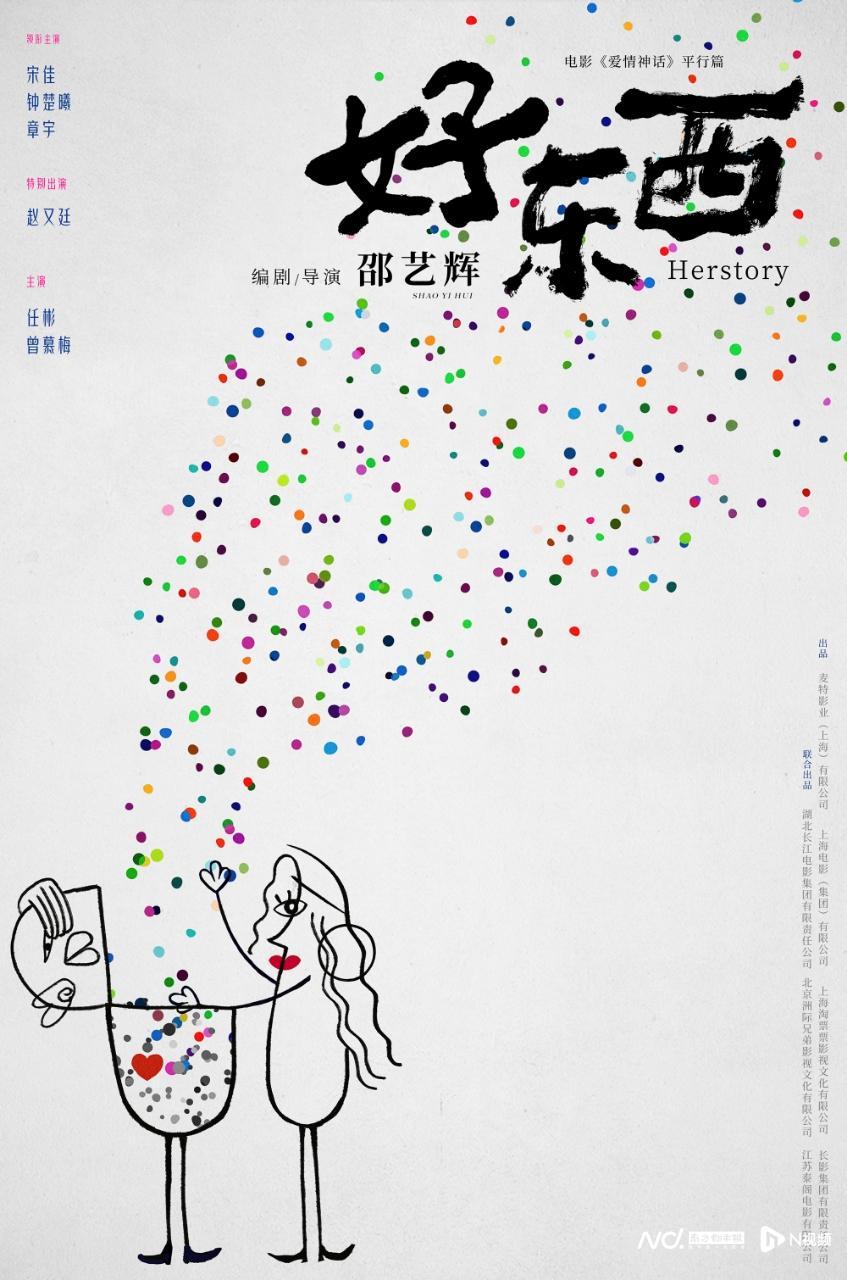
The Pulled Punch and the Sheathed Blade: Her Story (2024) as a Feminist “Stand-up Film” Stand-up comedy thrives on the art of the punch. When aimed upward, a well-executed punch can earn cheers and sharpen stand-up’s impact, using wit and precision to challenge privilege, authority, and hypocrisy. However, punching up is not without risk. It can provoke backlash from the privileged and the powerful, and navigating that backlash requires skill. This dynamic is not just a concern for stand-up; it is also relevant to comedy in film. It is particularly central to the recently released Chinese blockbuster comedy Her Story好东西 (dir. Shao Yihui 邵艺辉, 2024). Many feel that the film’s comedic effects resemble those of stand-up, relying on sharp, witty dialogue to tackle social issues.1 Yet its connection to stand-up comedy runs deeper than just dialogue style, so much so that it can be called a “stand-up film.” It not only adopts the verbal wit of stand-up but also aligns with a broader trend in Chinese stand-up comedy, mirrors the evolving landscape of the stand-up industry, and structures its comedic strategy around the same tensions of expression, censorship, and backlash that stand-up comedians navigate today. With its strong feminist edge, the film emerges within a broader trend of Chinese female stand-up comedians who have, in recent years, used humor to punch up, challenging traditional gender inequalities, and calling out patriarchal norms. However, in the stand-up world, this approach has not come without consequences. One notable example is comedian Yang Li 杨笠, who gained widespread attention in 2020 with her sharp observation: “Why are men always so confident when they’re actually so ordinary?” This quip struck a chord with many, especially women, and led to the popularization of the term “ordinary yet confident” (puxin 普信) to describe men who, bolstered by gender privilege, overestimate their abilities and attractiveness. At the same time, Yang became the target of intense cyberattacks, largely from male internet users. Many of these attackers used the term “women’s punches” (nüquan 女拳) to mock her, portraying her as an extremist pushing a radical, opportunistic feminist agenda aimed at gaining attention and personal benefit.2 The term “women’s punches” may have originated from the title of a 2011 Hong Kong television drama, which presents a fictionalized account of the life of Republican-era female martial artist Mok Kwai-lan 莫桂兰.3 As the title of the drama, the term was initially used in a positive light to emphasize the strength and empowerment of women. However, it was later co-opted by predominantly male Chinese internet users to ridicule feminists, exploiting its homophonic similarity to “women’s rights” (nüquan 女权) to mock and discredit feminist advocacy. The derogatory term has become so widely recognized that any post critical of men’s privileges or misconduct can attract comments like “Here we go, another punch” (you daquan le又打拳了), leading to the immediate dismissal of feminist discussions, the silencing of critical voices, and the reinforcement of existing gender biases.4 This context provides a useful lens for interpreting a key scene in Her Story. During a dinner with guests, the father (Mark Chao 赵又廷) of the film’s central family repeatedly encourages his 9-year-old daughter, Wang Moli 王茉莉 (Zeng Mumei 曾慕梅), to take up boxing, insisting that he himself is qualified to train her. Finally, frustrated by his persistence, Moli pounds the table, knocking over the dishes, and exclaims, “I don’t want to throw any punches (wo bu daquan我不打拳)!” Due to the comedic irony of the situation, this moment is humorous rather than angry. The irony lies in Moli declaring that she does not want to throw punches just as she pounds the table. Another layer comes from the father encouraging Moli to take up boxing, a traditionally male-dominated sport, which appears to reflect his pro-feminist stance. Yet it is precisely his persistent encouragement, delivered from a position of patriarchal authority and a sense of masculine pride in his own boxing skills, that pushes the daughter to the point of striking back. This moment captures the film’s nuanced position within the tension between China’s rising feminist discourse and its backlash. Anticipating derogatory tropes like “women's punches,” the film playfully preempts them with an ironic disclaimer: I—or the film itself—don’t want to throw any (feminist) punches, yet it delivers one at the same time, precisely because a man compels it. However, the disclaimer is not merely a camouflage; it carries a degree of truth, as the punch is not actually aimed at those who propagate such tropes. Rather than confronting the most overtly patriarchal, misogynistic, and anti-feminist viewers, the film directs its sharpest critique at so-called “feminist men” (nüquan nan 女权男). This term, often used with a negative connotation in Chinese internet discourse, describes men who claim to support feminism yet do so performatively or for self-serving reasons.5 In doing so, the film exemplifies a strategic form of punching up: challenging those who still hold privilege but are less likely to push back, rather than taking on the most entrenched and reactionary forces head-on. In the dinner scene, the father embodies the archetype of a “feminist man.” He divorced Moli’s mother, Wang Tiemei 王铁梅 (Song Jia 宋佳), a successful investigative journalist with a strong feminist perspective, because his financial dependence on her and his role in managing housework and childcare wounded his masculine pride. Now, he regrets that decision and attempts to win Tiemei back by immersing himself in feminist literature and frequently voicing his awareness of men’s structural oppression and gender privilege. Yet, despite his professed enlightenment, he remains entangled in performative masculinity. With Tiemei also present at the table, he is unable to suppress his insecurity and engages in petty displays of manliness, attempting to outdo a male guest, Xiao Ma 小马 (Zhang Yu 章宇), in consuming garlic or even medicinal pills. Convinced that Tiemei is interested in Xiao Ma, he sees the contest as a way to reassert his masculine dominance and outmatch his romantic rival. Watching her father’s petty display of manliness, Moli turns to a female guest, Xiao Ye 小叶(Zhong Chuxi 钟楚曦), and asks, “What’s this?” Xiao Ye wittily responds, “Toxic stuff” (youdu de dongxi有毒的东西). Her remark not only alludes to the widely recognized term “toxic masculinity” in Chinese internet gender discourse but also contrasts with the film’s Chinese title, Good Stuff (Hao dongxi好东西).6 Like the film’s English title, Her Story, or Herstory as written on the start-of-production poster in a wordplay that subverts the gendered bias in “history” to reclaim women’s agency,7 its Chinese title also carries a linguistic twist. The character 好, meaning “good,” is composed of two other characters, 女 and 子, which together can form a two-character word meaning “woman.” It suggests that, beyond delivering a punch at what is manly and toxic, the film also tells a story centered on what is womanly and good. This is a reassertion of women’s presence, value, and the healing and empowering bond they share. One notable example is a conversation between Moli and Xiao Ye, which focuses on Xiao Ye’s mother. Having left home at a young age, Xiao Ye reflects on how her now-estranged mother frequently criticized and belittled her, even fixating on the large size of her eyes. To her mother, they seemed defiant, as if mirroring an unspoken dissatisfaction. If Xiao Ye so much as glanced at her mother the wrong way, the latter would immediately threaten to slap her. Then, Xiao Ye mentions in passing the reason behind her mother’s cruelty: her father. She explains that her eyes resemble her mother’s, whose similar gaze often provoked her father’s violence, leading him to beat both her mother and her. Hearing this, Moli gazes at Xiao Ye and says, “Your eyes are beautiful and bright. I like it when you look at me. However you look at me, it's okay.” The warmth of her words overwhelms Xiao Ye, bringing tears to her eyes. In this scene, three narrative layers are carefully structured. In the foreground, the visually focused bond between the female characters embodies emotional resilience and mutual care, offering warmth and healing against oppressive forces. In the middle ground, a woman is present only through dialogue. Initially appearing domineering and harsh, she complicates the binary of victim and oppressor, as she herself is also entangled in the very structures that constrain her. In the far background, nearly out of focus, lingers the father figure — the silent force that sets the cycle of oppression, resentment, and violence into motion. This is one of the few moments when the film addresses gendered violence and misogyny, along with the more overt expressions of patriarchy and male entitlement, in contrast to the subtler presence of the “feminist men.” Not only is this a strategic choice to navigate and preempt potential backlash to the film’s “feminist punch,” but it also reflects the film’s decision to center women’s relationships, almost as if refusing to grant those abusive men more significance than they deserve. By relegating these figures to the background, the film condemns their actions without allowing them to dominate the narrative, instead highlighting an idealized women’s alliance as the true focus of the story. The idealized women’s alliance is mainly composed of Moli, Tiemei, and Xiao Ye, whose relationships, despite moments of conflict, misunderstanding, and stubbornness, remain stable, healing, and empowering. Tiemei, unlike the stereotypical East Asian “tiger mom,” raises Moli with encouragement rather than pressure, emphasizing independence and self-respect over obedience and academic achievement. Moli, far more emotionally mature than most children her age, offers sisterly support not just to Xiao Ye but even to her own mother. Xiao Ye, though overly preoccupied with romance as a way to compensate for her emotionally deprived childhood, is also resilient and expressive in her care for others, providing warmth and emotional support to both Tiemei and Moli. Together, they create a deeply connected and nurturing alliance. This alliance also extends to other characters, forming a broader network of support. Female figures such as Tiemei’s colleagues and Moli’s primary school language teacher play integral roles within this network, offering encouragement and protection in ways that reinforce the film’s depiction of women’s solidarity. Male figures such as Xiao Ma and his friends strive to be allies to women, often demonstrating a gendered awareness and offering friendly support. Even the “feminist men,” like Moli’s father, eventually learn to better support and understand women, though they may not entirely relinquish their sense of male entitlement — something the film playfully preserves as a comedic element. This again mirrors China’s stand-up comedy scene. During Yang Li’s era, the few female comedians in the industry had already begun forming an alliance, supporting one another in a largely male-dominated field and navigating the backlash they faced.8 By 2024, this alliance has grown even stronger as more female comedians have emerged. Together, they bring to the forefront of their performances the struggles faced by Chinese women today, such as menstrual stigma, pressure to marry and have children, workplace discrimination, gender stereotypes, and patriarchal norms. Many of these issues are also explored through the witty dialogues in Her Story.9 Meanwhile, Chinese male comedians have also begun demonstrating gender awareness, with a few crafting jokes that satirize traditional masculinity. However, the stand-up comedy industry may be nothing more than a fragile bubble. In fact, before the recent surge of more female comedians, the industry had just experienced a year-long shutdown due to censorship over controversial jokes.10 Online backlash still continues to target female comedians and their feminist advocacy. Moreover, even if the industry continues to make strides in this direction, it remains an isolated phenomenon within China's broader environment of gender inequality. Likewise, a frequently mentioned word in Chinese reviews of Her Story is “utopia.” Even many viewers who appreciate the film feel that its portrayal of gender dynamics, including both the solidarity among women and the goodwill from men, is overly idealized and softened. In their view, the film presents a feel-good version of feminism that seems confined to metropolitan bubbles like Shanghai, where the story is set.11 Some critics see this, once again, as akin to the dynamics of Chinese stand-up comedy. As one reviewer puts it, “All of this makes the film nothing more than a stand-up comedy performance tailored for those who already share its views, using humor to dissolve the sharpness of progressivism before retreating into a comfort zone that signals goodwill to any potentially hostile gaze.”12 Another way to interpret this, however, is that the sharpness is not necessarily dissolved but rather sheathed. The film’s feel-good warmth, humor, and hopeful moments may serve as the sheath, concealing a blade aimed at a larger, colder reality, where external constraints make direct confrontation ineffective or unfeasible. This article has already noted how, in gender dynamics, the sheathed blade points to the abusive father behind the warm conversations. This extends to the film’s portrayal of some other male figures, such as stalkers and bullies, who are humorously and swiftly dealt with by Tiemei or Moli, but in the much harsher and more unyielding reality, they remain persistent threats to women. The film’s sheathed blade also touches on broader and more sensitive social issues beyond gender dynamics. Subtle details throughout the film hint at deeper, unspoken realities. Xiao Ye’s tiny apartment, filled with homegrown vegetables, appears to be a cozy detail. Tiemei and Xiao Ye’s frantic attempts to address Moli’s childhood nearsightedness seem hilarious on the surface. When Tiemei carries Moli on her back through the streets, passing a group of young people cheerfully singing the classic song Tomorrow Will Be Better明天会更好, it, too, seems like just an uplifting moment. Yet these moments all allude to the suppressed memories of the COVID-19 pandemic. The homegrown vegetables reflect the habit of stockpiling food during lockdowns, the nearsightedness results from excessive online classes, and the singing scene is almost a direct recreation of late May 2022, when young people gathered on Yanqing Road, singing the same song under the watch of a nearby police car, just before Shanghai’s lockdown was finally lifted. Had Her Story not sheathed these allusions within warmth and humor, it might well have faced the same fate as Lou Ye’s An Unfinished Film 一部未完成的电影 (2024), which directly confronted pandemic experiences. The latter was completely erased in China. On a broader level, the sheathed blade may embody more than just a tactical maneuver. It also reflects the film’s nuanced core perspective: a dialectic between cold disillusionment and the enduring warmth of hope. This contrast is subtly woven into the film’s details, such as a wall adorned with seemingly random scribbles that, upon closer inspection, reveal hidden messages. Among these, words spoken by both Tiemei and Moli stand out: “See reality for what it is. Give up on illusions.” Yet, positioned just above these words, the phrase “Tomorrow will be better” emerges as an answer to the question, “Will this world get better?”13 These seemingly contradictory messages are dialectically unified in the film's final message. Tiemei and Moli sit together, discussing Moli’s essay titled I No Longer Dream 我不再幻想, when Moli suddenly remarks, in a tone far beyond her years, “It is precisely because we are optimistic and confident enough that we can confront tragedy head-on!” At Moli’s reminder, Tiemei recalls that those very words came from an article she herself wrote as an investigative journalist the year Moli was born. As the weight of this realization sinks in, the camera lingers on Tiemei’s face, capturing the subtle yet profound shift in her expression. Viewers familiar with the context will recognize where the sheathed blade points. Moli is nine years old, and nine years before 2024 — the film’s production and release time — is 2015. In that year, events like the Yangtze River cruise ship disaster underscored the tightening of information control. They clearly marked the end of an era in China, a time when print media thrived, investigative journalism carried weight, media oversight was more open, and aspirations for social justice, transparency, and progress flourished.14 Over the ensuing years, investigative journalism has vanished under censorship, while traditional journalism has rapidly declined in the face of new media. Now, having left the world of journalism, Tiemei has spent the entire film struggling to navigate the new media industry, grappling with the harsh reality of relinquishing her ideals. Yet these disillusioning nine years for Tiemei have also been formative for a new generation represented by Moli. With the future ahead of her, Moli reminds Tiemei of a belief Tiemei once held firmly but has almost forgotten: that optimism and confidence are most essential precisely in the face of stark realities. Her Story’s depth ultimately resides in this very paradox: a world where disillusionment and hope coexist. It neither issues a radical call to arms nor succumbs to despair. Instead, it mirrors the craft of stand-up comedy by wrapping sharp critiques in humor, balancing disillusionment with hope, and countering erasure with tactical wit. Like a well-placed punchline, its critique lands with precision, embedding resistance within warmth and irony. The pulled punch and the sheathed blade are both a strategic choice and an embodiment of the film’s nuanced core perspective, one that ensures the story and the hope it carries continue to resonate. Notes
|
Quarterly essays on greater China by scholars who study the region closely, plus notice of our Atlanta events. Published continuously since 2002.